
If you have opened a news app in the last couple of years, you have probably seen a headline warning that artificial intelligence is coming for your job. These stories are everywhere, and they range from cautiously optimistic to downright alarming. It is no wonder that so many people feel anxious. Whether you are a teacher, an accountant, a graphic designer, a customer service representative, or a software developer, the question “Will AI replace me?” has probably crossed your mind at least once.
The honest answer is more nuanced than a simple yes or no. AI is changing the way we work, and it will continue to do so, but the story is not one of wholesale job replacement happening overnight. It is a story of gradual transformation, uneven impact across industries, and new opportunities appearing alongside real challenges. This article aims to give you a grounded, realistic picture of what is actually happening, so you can feel informed rather than frightened.
Why This Fear Feels So Real
Before diving into the facts, it helps to understand why this fear resonates so strongly. Humans have lived through waves of automation before. The industrial revolution replaced many manual trades. The rise of computers eliminated countless clerical roles. Each time, there was widespread anxiety, and each time, the workforce adapted, though not always painlessly and not always fairly.
What makes this moment feel different is the speed and visibility of AI’s progress. Tools like ChatGPT, image generators, and coding assistants became mainstream in a remarkably short period of time. People could suddenly see, with their own eyes, a machine writing essays, drafting emails, or generating artwork in seconds. That kind of visible capability creates a much more immediate emotional reaction than, say, a factory installing a new assembly line robot behind closed doors.
It is also worth acknowledging that this anxiety is not irrational. Some jobs really are changing quickly, and some tasks that used to require a human are now handled by software. Dismissing these concerns would not be honest or helpful. Instead, it is more useful to look closely at what kinds of work are actually affected, and how.
AI Replaces Tasks, Not Entire Jobs (Usually)
One of the most important distinctions to understand is the difference between a task and a job. Almost every job is made up of many different tasks. A nurse does not just take vital signs. A nurse also comforts patients, communicates with doctors, makes judgment calls in emergencies, and builds trust with people who are scared or in pain. A marketing manager does not just write copy. They also strategize, negotiate with vendors, interpret data, and manage relationships with a team.
AI tools are generally very good at automating specific, well-defined tasks. Summarizing a document, transcribing audio, generating a first draft of an email, or sorting through spreadsheets are the kinds of tasks that AI can already handle reasonably well. What AI struggles with, at least for now, are tasks that require deep contextual judgment, emotional intelligence, physical dexterity in unpredictable environments, or the ability to navigate ambiguous human situations.
This means that for most people, the more realistic outcome is not “my job disappears” but rather “parts of my job change.” A paralegal might spend less time doing manual document review and more time verifying AI-generated summaries and handling client communication. A customer support agent might handle fewer routine questions, because a chatbot answers those, and instead spend more time on complex or emotionally sensitive cases that the chatbot escalates.
Which Jobs Are Most and Least Exposed
Research from organizations like the OECD, McKinsey, and various universities has tried to estimate which occupations are most exposed to AI automation. While the exact numbers vary depending on the study and methodology, some patterns show up consistently.
Jobs that involve a lot of repetitive, rules based, digital work tend to be more exposed. This includes some aspects of data entry, basic bookkeeping, routine content writing, translation of straightforward text, and certain types of coding. It is worth noting that “exposed” does not always mean “eliminated.” It often means that AI can assist with or partially automate parts of the role, changing what the human worker spends their time doing.
Jobs that involve physical presence in unpredictable environments tend to be less exposed, at least for now. This includes skilled trades like plumbing, electrical work, and carpentry, as well as roles like childcare, elder care, and many hands-on healthcare positions. Robotics is advancing, but building a machine that can safely and reliably navigate a cluttered basement or comfort a frightened toddler is a very different challenge than building a chatbot.
Jobs that rely heavily on relationship building, trust, negotiation, and complex human judgment also tend to be more resilient. Therapists, teachers, sales professionals who manage long term client relationships, and skilled managers who need to read a room and make judgment calls under uncertainty are examples of roles where AI can be a helpful tool but is unlikely to be a wholesale replacement anytime soon.
Creative fields present an interesting middle ground. AI can now generate images, music, and text with impressive fluency, which has understandably worried many creative professionals. However, a lot of creative work is not just about producing an output. It is about understanding a client’s vision, iterating based on feedback, and injecting a distinct point of view. Many creative professionals are finding that AI becomes a tool in their process rather than a replacement for their judgment and taste.
The Difference Between Augmentation and Automation
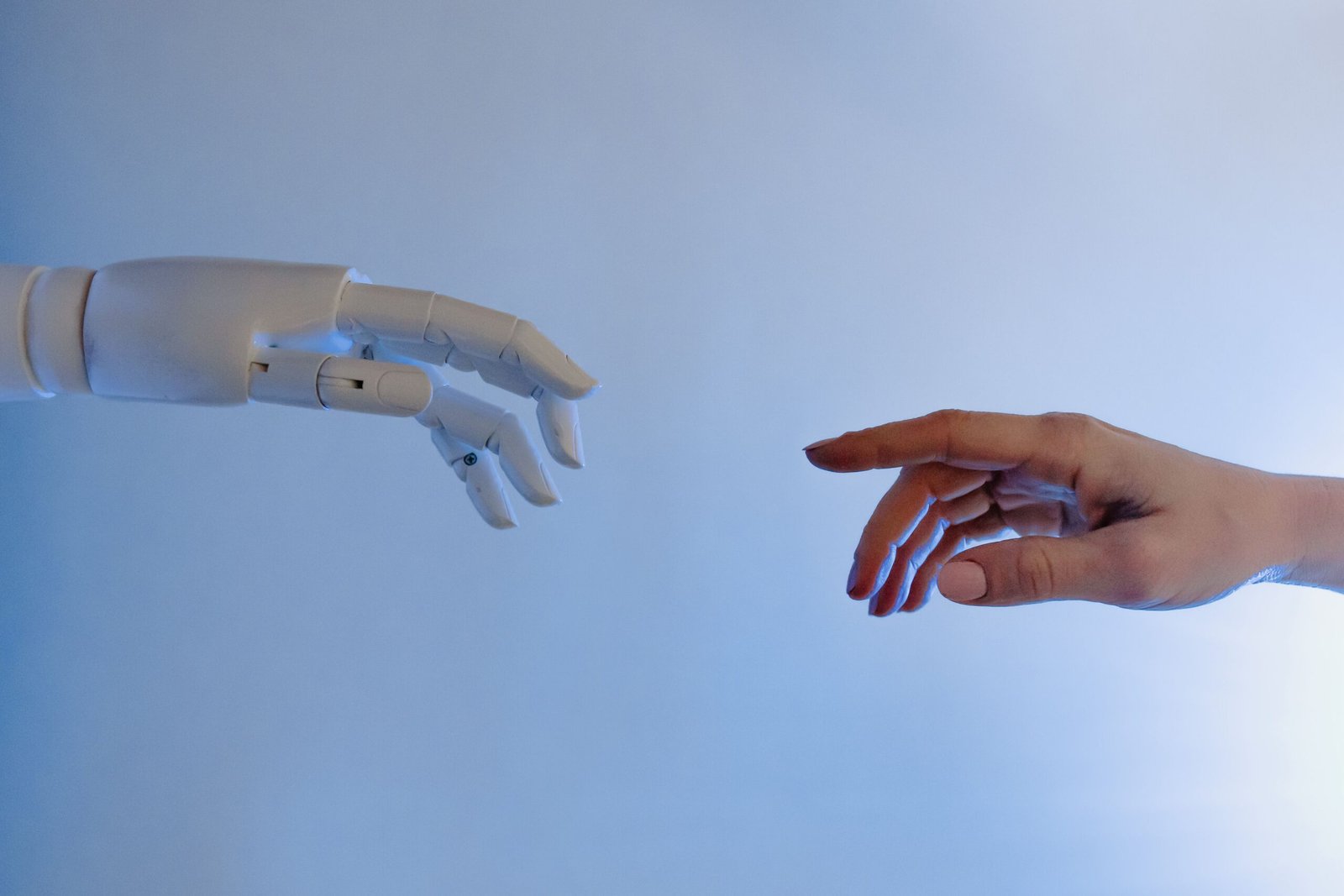
A useful mental model here is the distinction between augmentation and automation. Automation means a machine fully takes over a task that a human used to do. Augmentation means a machine helps a human do their job better or faster, while the human remains in control.
Right now, most real world AI adoption in the workplace looks more like augmentation than pure automation. A radiologist uses AI to flag potential areas of concern on a scan, but the radiologist still makes the final diagnosis and takes responsibility for it. A software developer uses an AI coding assistant to write boilerplate code faster, but the developer still needs to understand the system architecture, debug tricky issues, and make design decisions. A writer might use AI to brainstorm ideas or clean up a draft, but the writer still needs to have something meaningful to say.
This pattern is likely to continue for many roles, at least in the near to medium term. It does not mean the transition will be comfortable or that no jobs will be lost. Some roles genuinely will shrink in number as fewer people are needed to produce the same output. But it does mean that for a large portion of the workforce, the more immediate reality is learning to work alongside AI tools rather than being replaced outright by them.
Industries Feeling the Impact Right Now
Some industries are already seeing tangible shifts. In customer service, many companies have implemented AI chatbots to handle routine inquiries, which has reduced the need for large teams of entry level support agents in some organizations. In software development, AI coding assistants have sped up certain kinds of work, though senior developers are still very much in demand for complex problem solving and architectural decisions.
In content and media, AI tools are being used to draft basic articles, generate marketing copy, and assist with video editing. This has changed the day to day work for many writers and editors, and it has reduced demand for certain types of low value content production. At the same time, demand has grown for editors and strategists who can guide AI output, ensure accuracy, and maintain a distinct brand voice.
In finance and accounting, AI is increasingly used for tasks like fraud detection, basic bookkeeping, and financial report generation. Entry level analyst roles that involve a lot of repetitive number crunching are more exposed, while roles requiring judgment, client relationships, and regulatory expertise remain in demand.
It is worth noting that these changes are not evenly distributed. A small business might not have the resources or the need to adopt sophisticated AI tools, while a large corporation might invest heavily in automation to cut costs. Geographic location, industry regulation, and company size all play a role in how quickly these changes unfold.
What History Teaches Us About Technological Disruption
It can be genuinely helpful to look back at previous waves of automation to understand what tends to happen. When ATMs were introduced, many people predicted the end of the bank teller profession. Interestingly, the number of bank tellers in the United States actually grew for a period after ATMs became widespread, because banks could open more branches at lower cost, and tellers shifted toward more relationship focused and sales oriented tasks.
This does not mean every technology story ends this way. The transition from manual typesetting to desktop publishing did eliminate a large number of specialized printing jobs, and those workers often had to retrain or move into different fields entirely. Some transitions are smoother than others, and some create real hardship for the people directly affected, particularly when the transition happens quickly and support systems are lacking.
The honest lesson from history is that technological disruption tends to create a mix of outcomes. Some jobs are eliminated, some are transformed, and entirely new jobs are created that did not exist before. Nobody in the 1990s could have predicted the rise of social media managers, app developers, or search engine optimization specialists. It is quite likely that new AI related roles, some of which do not exist yet, will emerge over the coming years, including AI trainers, prompt engineers, AI ethics specialists, and roles focused on auditing and verifying AI output for accuracy and fairness.
Practical Steps You Can Take Today
Given this reality, what can you actually do to protect your career and feel more secure? Here are some grounded, practical suggestions.
First, get familiar with the AI tools relevant to your field, even if you are not required to use them yet. Understanding how these tools work, what they are good at, and where they fall short will make you more valuable and adaptable, regardless of your industry. Many free or low cost tools exist that let you experiment without a big commitment.
Second, focus on strengthening the skills that AI struggles to replicate. This includes critical thinking, complex problem solving, emotional intelligence, leadership, negotiation, and creativity that involves genuine originality rather than pattern replication. These are often called durable skills, because they tend to remain valuable across many different technological shifts.
Third, stay curious about your industry’s trajectory. Read up on how AI is being adopted in your specific field, and pay attention to what your employer and competitors are doing. Being proactive about understanding change is far less stressful than being caught off guard by it.
Fourth, consider how you might position yourself as someone who can manage, guide, or audit AI output rather than someone who is competing directly with it. In many fields, the people who thrive during periods of automation are the ones who learn to direct the technology rather than simply performing the tasks the technology can now do.
Fifth, build and maintain your professional network. Relationships matter more, not less, in a world where digital output is easier to produce. People still want to work with people they trust, and a strong network can open doors that a resume alone cannot.
Finally, be kind to yourself during this process. Learning new tools and adapting to change takes time and energy. It is completely normal to feel a mix of curiosity and anxiety about these shifts. You are not alone in navigating this, and there is no need to have it all figured out immediately.
A Realistic Outlook, Not a Doom Prediction
It is easy to get swept up in either extreme when it comes to AI and jobs. On one end, some voices insist that AI will replace most human labor within a few years, leading to mass unemployment. On the other end, some dismiss AI’s impact entirely, insisting nothing will really change. Neither extreme reflects the more complicated reality that is actually unfolding.
The most likely path forward involves significant change, some genuine job losses in certain sectors, meaningful transformation of many existing roles, and the emergence of new kinds of work. Governments, educational institutions, and companies all have a role to play in making this transition smoother, whether through retraining programs, updated education systems, or thoughtful workplace policies. Individuals also have real agency in how they prepare for and respond to these changes.
If you take one thing away from this article, let it be this: AI is a powerful tool that is reshaping how work gets done, but it is not a magic replacement for human judgment, creativity, empathy, and adaptability. The people and organizations that will do best in this new landscape are the ones who approach AI with curiosity rather than fear, who invest in the skills that remain distinctly human, and who stay engaged with how their field is evolving.
Change can be uncomfortable, but it is also an opportunity. By staying informed, building adaptable skills, and approaching AI as a collaborator rather than a competitor, you can navigate this transition with more confidence and a lot less anxiety than the headlines might suggest.