
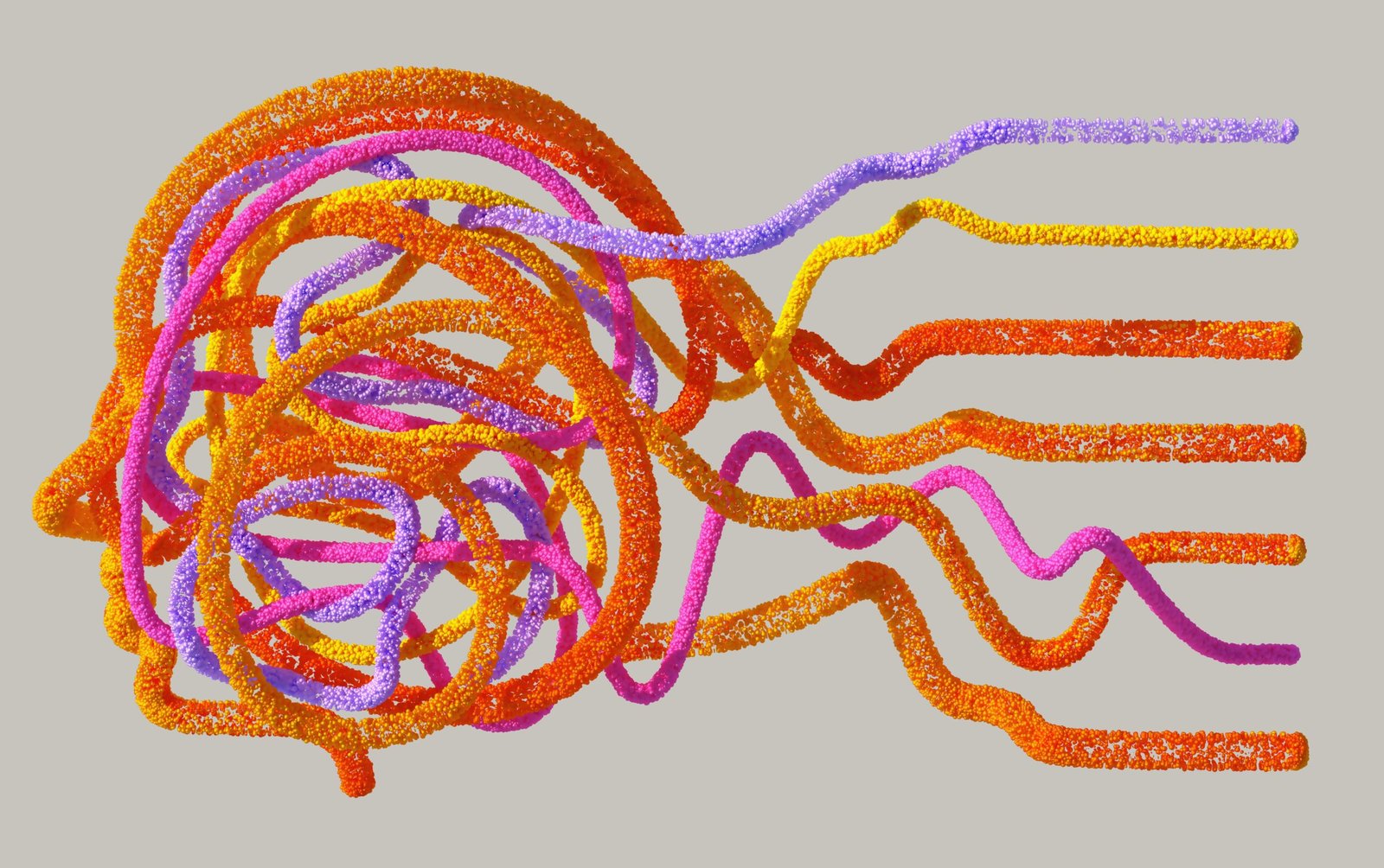
Neural networks are the engine behind most of the AI breakthroughs you’ve heard about in recent years, from tools that generate images and write text, to apps that recognize your voice or your face. The name itself, “neural network,” sounds intimidating, like something only a neuroscientist or a computer scientist could understand.
The good news is that the core idea is much simpler than it sounds. You don’t need a background in math or programming to understand what a neural network actually does. This guide walks through it step by step, using plain language and everyday comparisons, so the next time you hear the term, you’ll actually know what’s going on underneath it.
The Basic Idea: Inspired by the Brain, Not a Copy of It
Neural networks get their name because they’re loosely inspired by how neurons in the human brain work. In your brain, neurons receive signals, and if those signals are strong enough, the neuron “fires” and passes a signal along to the next neurons in the chain. Over time, connections between neurons that get used often become stronger, and connections that don’t get used weaken. That’s roughly how the brain learns.
A neural network borrows this basic structure. It’s built from simple units, often called “nodes” or “artificial neurons,” connected to each other in layers. Each connection has a strength, called a “weight,” and the network adjusts these weights as it learns, similar to how connections between real neurons strengthen or weaken with experience.
It’s important to say clearly: this is inspiration, not imitation. A neural network is nowhere near as complex as an actual human brain, and it doesn’t “think” the way we do. But the basic idea, simple units connected together, learning by adjusting the strength of those connections, turns out to be a remarkably powerful approach for recognizing patterns.
The Building Blocks: Neurons, Layers, and Connections
To understand how a neural network works, it helps to break it into its basic pieces.
Neurons (nodes). Each neuron is a small unit that takes in some numbers, does a simple calculation, and produces an output number. On its own, a single neuron isn’t very impressive. The power comes from combining thousands or millions of them together.
Layers. Neurons are organized into layers. There’s an input layer, where information first enters the network (like the pixel values of an image). There’s an output layer, where the final answer comes out (like “this is a picture of a cat, with 92 percent confidence”). In between, there are one or more “hidden layers,” where most of the actual pattern-finding happens.
Connections and weights. Every neuron in one layer is typically connected to neurons in the next layer, and each connection has a weight, a number that determines how much influence that connection has. Learning, in a neural network, is really just the process of adjusting these weights until the network’s outputs become accurate.
Picture it like a large, multi-layered flowchart. Information enters on one side, passes through several layers where it gets transformed and combined in different ways, and comes out the other side as a prediction or a decision.
A Simple Example: Recognizing Handwritten Digits
One of the classic examples used to explain neural networks is recognizing handwritten digits, the kind of task used by postal services to automatically read zip codes.
The input layer takes in an image of a handwritten number, broken down into its individual pixels. Each pixel’s brightness becomes a number fed into the network.
The hidden layers process this information in stages. Early layers might learn to detect simple things, like edges and curves. Later layers combine those simple patterns into more complex ones, like the loop of a “6” or the crossing lines of an “8.”
The output layer produces ten numbers, one for each possible digit, zero through nine, representing how confident the network is that the image shows that digit. Whichever number has the highest confidence becomes the network’s final answer.
What’s remarkable is that nobody explicitly programmed the network to look for loops or curves. It discovered, entirely through training, which patterns in the pixel data were useful for telling digits apart.
How a Neural Network Actually Learns
This is the part that trips people up the most, so it’s worth slowing down here. A neural network learns through a repeated, four-step cycle.
Step 1: Make a prediction. The network takes an example, like an image of a handwritten “7,” and passes it through its layers, producing a guess.
Step 2: Measure how wrong the guess was. Since the network is shown examples where the correct answer is already known during training, it can compare its guess to the actual answer and calculate how far off it was. This difference is often called the “error” or “loss.”
Step 3: Figure out which connections caused the error. Using a process called backpropagation, the network works backward through its layers, figuring out how much each individual connection contributed to the mistake.
Step 4: Adjust the weights slightly. Each connection’s weight gets nudged a small amount in the direction that would have reduced the error. This process is called gradient descent, and despite the technical-sounding name, the idea is simple: make small adjustments that push the network’s future guesses a little closer to correct.
This entire cycle happens once for a single example, but it gets repeated an enormous number of times, often across millions of examples, with the network’s weights inching closer to accurate with each round. Over time, this slow, repeated process of guessing, checking, and adjusting is what allows the network to go from producing random noise to making genuinely useful predictions.
Why Depth Matters: What “Deep Learning” Actually Means
You’ve probably heard the term “deep learning” used alongside neural networks, and now that you understand the basic layered structure, the term becomes much easier to explain.
“Deep” simply refers to having many hidden layers stacked between the input and the output, rather than just one or two. Early neural networks in the 1980s and 1990s were often shallow, with only a single hidden layer, which limited how complex a pattern they could learn.
Modern deep learning networks can have dozens, or even hundreds, of layers. Each additional layer allows the network to build increasingly abstract representations of the data. In an image recognition network, for example, early layers might detect simple edges, middle layers might combine those edges into shapes like eyes or wheels, and later layers might combine those shapes into recognizable objects like faces or cars.
This layered, increasingly abstract way of processing information is a big part of why deep neural networks have become so much more capable than earlier approaches. They can learn far richer, more nuanced patterns than a shallow network ever could.
Different Types of Neural Networks (And What They’re Good At)
Not all neural networks are built the same way. Different structures have been developed for different kinds of tasks.
Feedforward networks are the simplest type, where information flows in one direction, from input to output, without looping back. These are a good starting point for understanding the basics, and they’re still useful for straightforward prediction tasks.
Convolutional neural networks (CNNs) are specially designed for image data. They scan across an image in small patches, which makes them very efficient at detecting visual patterns like edges, textures, and shapes, regardless of where they appear in the image. This is the technology behind most modern image recognition and photo tagging features.
Recurrent neural networks (RNNs) were designed to handle sequences, like sentences or time-series data, by keeping a kind of memory of what came before. They were widely used for early language tasks, though they’ve largely been replaced by a newer approach.
Transformers are the architecture behind most of today’s large language models, including the AI chatbots you may have used. Transformers are especially good at understanding relationships between different parts of a sequence, like how a word early in a sentence relates to a word much later, which makes them powerful for understanding and generating language.
You don’t need to memorize all of these, but it’s worth knowing that “neural network” is really an umbrella term, and the specific architecture used depends heavily on the type of data and task involved.
Common Misconceptions Worth Clearing Up
“Neural networks think like the human brain.” They’re inspired by very simplified ideas from neuroscience, but they don’t reason, understand meaning, or have anything resembling human consciousness. They’re pattern-recognition systems, extremely capable ones, but pattern recognition all the same.
“Bigger networks are always better.” More layers and more neurons generally allow a network to learn more complex patterns, but they also require more data and computing power to train properly, and they can become harder to train effectively without running into other problems.
“A trained network understands what it learned.” A network trained to recognize dogs in photos has no concept of what a dog actually is. It has learned statistical patterns in pixel data that correlate strongly with the label “dog.” This is why these systems can sometimes fail in strange, unexpected ways when they encounter something that doesn’t match the patterns they were trained on.
“Training a neural network is the same as running it.” Training (the process of adjusting all those weights) is usually the slow, computationally expensive part, often taking hours, days, or even weeks on powerful hardware. Once trained, actually using the network to make a prediction (called “inference”) is typically much faster, which is why you can get a near-instant response from an AI chatbot even though the model behind it took an enormous amount of time and computing power to train.
Why Understanding This Matters
You don’t need to build a neural network to benefit from understanding, at a basic level, how one works. It helps make sense of what’s actually happening when your phone recognizes a face in a photo, or when a chatbot generates a surprisingly thoughtful response, or when a recommendation engine seems to know exactly what you want to watch next.
It also helps set realistic expectations. Neural networks are remarkably good at finding patterns in data, but they’re not magic, and they’re not reasoning the way a person does. Knowing the basic mechanics, layers of simple units, connected by adjustable weights, learning through repeated small corrections, makes it much easier to understand both what these systems are capable of, and where their limitations come from.
The Bottom Line
At its core, a neural network is a layered system of simple units that learn by adjusting the strength of their connections, based on repeated exposure to examples and gradual correction of their mistakes. That process, inspired loosely by the brain but far simpler in practice, is powerful enough to recognize handwritten digits, identify faces, understand spoken language, and generate remarkably coherent text.
It’s a genuinely elegant idea once you strip away the intimidating name: show the system enough examples, let it make mistakes, and nudge it a little closer to correct each time. Repeat that process millions of times, and you end up with a system capable of some remarkably impressive things.